



Mass transfer contact devices for
cyclic distillation
The theory of cyclic rectification demonstrates that maximum component separation efficiency is achieved when two conditions are met. The first condition is that the vapor leaving a tray is in equilibrium with the liquid remaining on that tray (mass transfer conditions between vapor and liquid). The second condition is the absence of liquid mixing between adjacent trays as the liquid flows from one tray to another (hydrodynamic conditions of ideal plug flow). Let us focus on the second task.
Liquid mixing conditions on adjacent trays.
In cyclic distillation, there are three possibilities for liquid mixing between adjacent trays. The first is liquid entrainment from the lower tray to the upper one; this is prevented by increasing the tray spacing. The second is liquid weeping onto the lower tray; this is eliminated by increasing the pressure drop between the trays. The third is liquid mixing during the transfer from one tray to another.
Attempts to implement a cyclic operating mode for the column using conventional trays were unsuccessful. The transfer of liquid from tray to tray was accompanied by significant liquid mixing, which negated all the advantages of the cyclic mode and reduced the column's throughput. It became clear that trays of a special design were required to realize the advantages of cyclic distillation. The first steps in this direction were trays with an external mechanical drive. While they could be used as laboratory devices, their industrial application presented significant challenges regarding control, cost, and the disruption of the liquid flow's hydrodynamics along the height of the column.
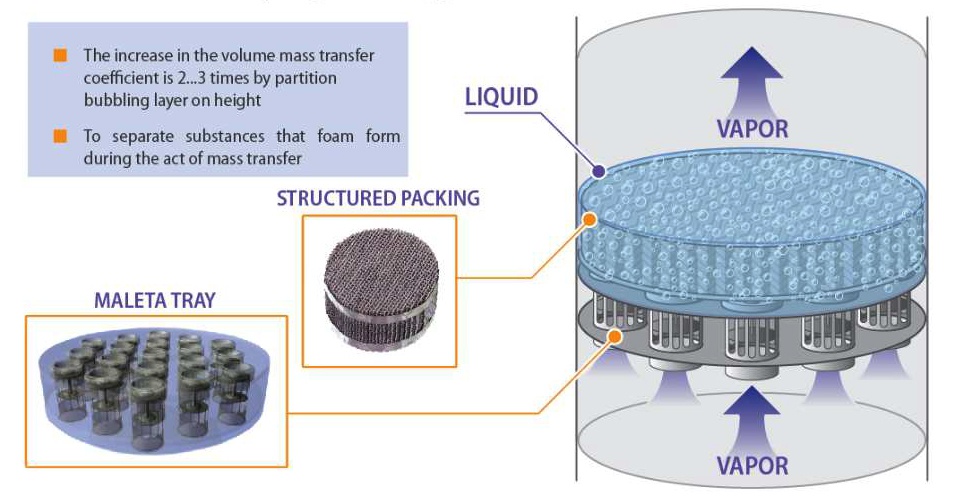
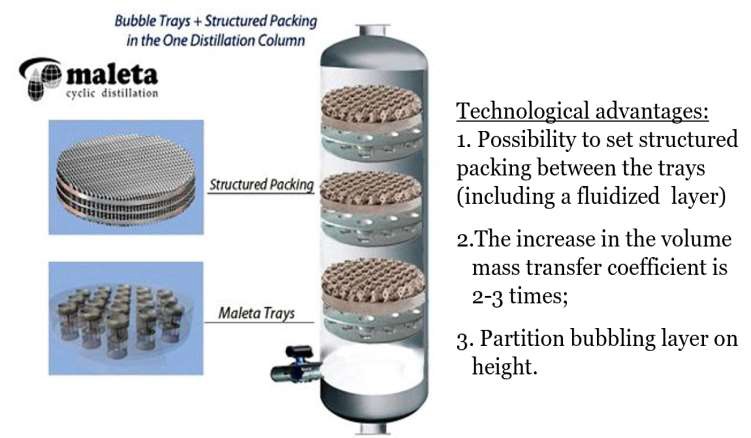
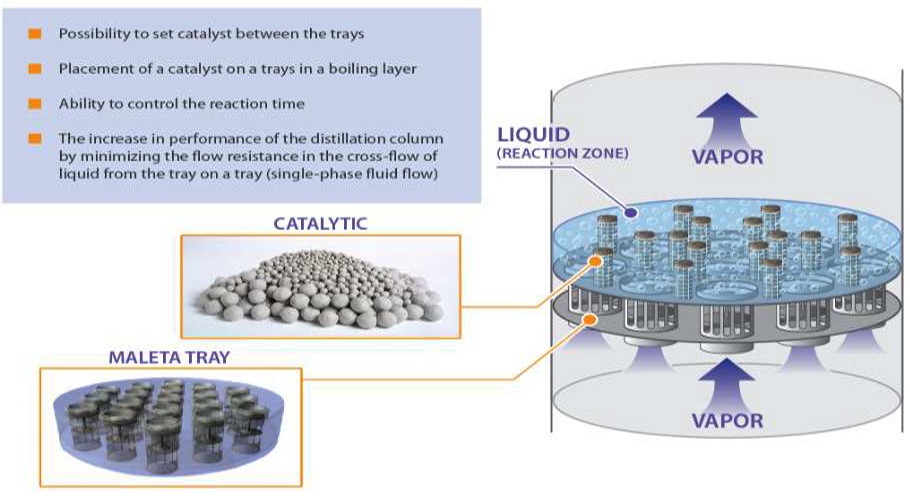
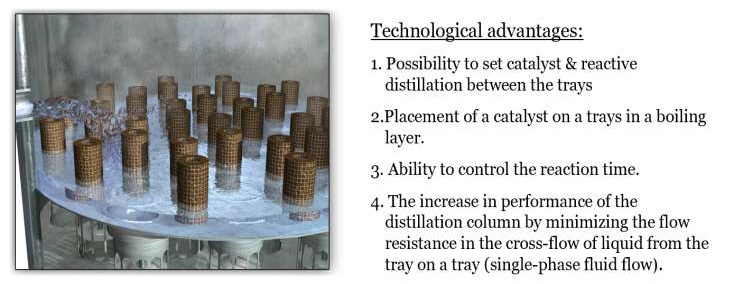
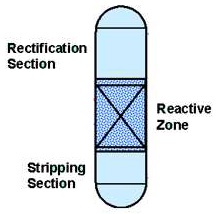
Engineers at the company Maleta Cyclic Distillation LLC proposed a new technical idea. The essence of the idea is as follows. During the transfer of liquid from tray to tray, at the moment the vapor flow is shut off, the liquid from the bubbling deck of the upper tray flows into a closed sluice chamber located beneath the tray. Throughout the height of the column, the liquid on all trays is retained in the lock chambers; the bubbling sections of all trays remain free of liquid. When steam is fed into the column, the steam pressure pulse sequentially opens the tray sluice chambers from bottom to top, and the liquid drains from each tray onto the empty tray located below it. Thus, the vapor exerts a controlling effect on the flow of liquid from tray to tray. The transfer time from tray to tray is 1–2 seconds. Cyclic distillation trays offer unique capabilities. For instance, packing can be installed on the trays, significantly increasing the volumetric mass transfer coefficient and acting as a foam breaker. In reactive cyclic distillation, a catalyst can be placed on the tray.
U.S. Patents |
Eurasian patents |
European patents |

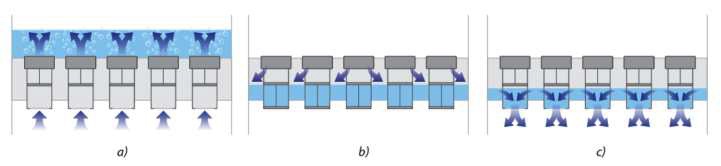
Operating phases of Maleta contact tray
a) Bubbler on a tray;
b) Liquid in the airlock chamber;
c) Transfer of liquid from the airlock chamber to the lower tray.
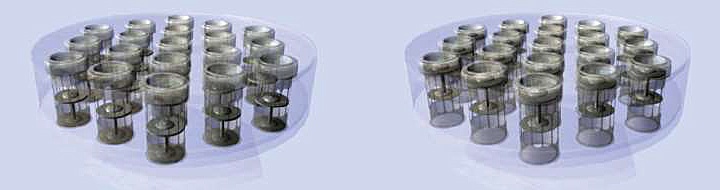
Shut-off valve position for various phases
Placement of structured packing on a maleta tray
Placement of the catalyst on a maleta tray in reactive distillation
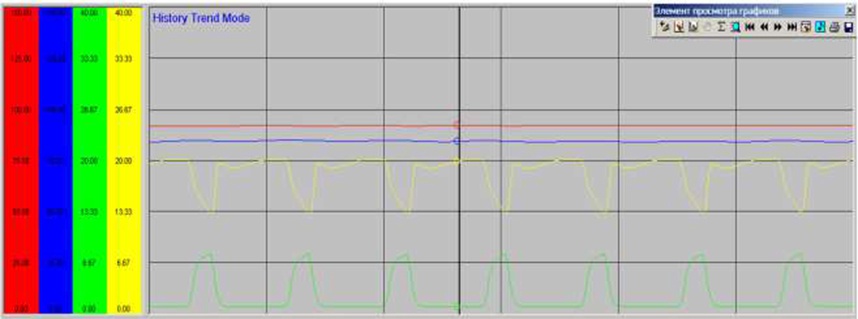
5-minute operational trends of cyclic distillation column parameters
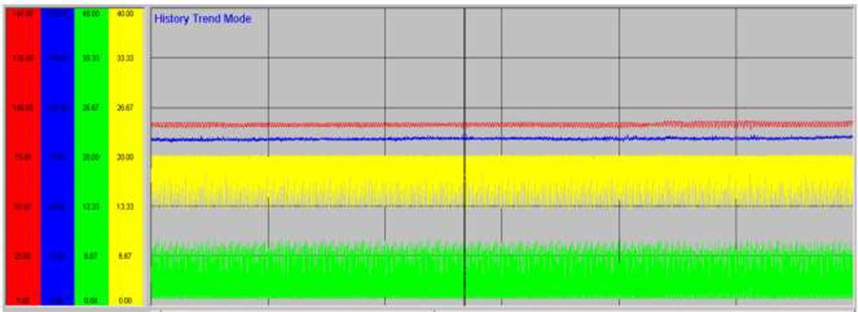
5 days operational trends of cyclic distillation column parameters
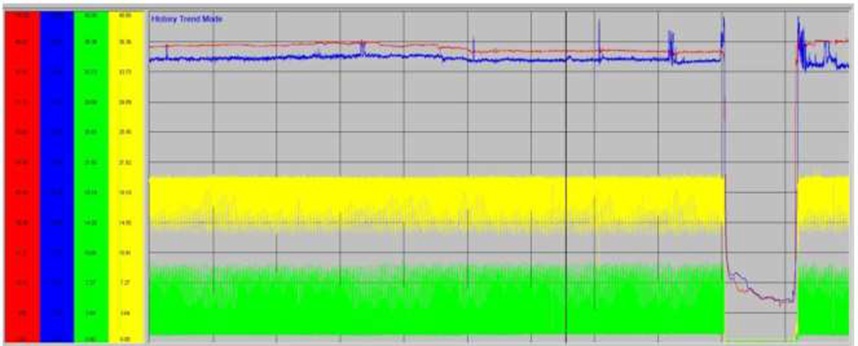
30 days operational trends of cyclic distillation column parameters